Light exposure is your body's primary signal for alertness and sleep readiness. Understanding these mechanisms helps you work with your natural biology rather than against it.
Morning Light Exposure
Bright light early in your day—ideally from sunlight—sets your circadian rhythm. This creates a biological signal for alertness and energy, which also establishes the contrast needed for evening sleep.
A 20–30 minute walk in morning sunlight is one of the most effective strategies. No special equipment required.
Evening Light Management
As evening approaches, gradually reducing light exposure signals your body to prepare for sleep. This includes managing artificial light from screens, overhead lighting, and external sources like street lamps.
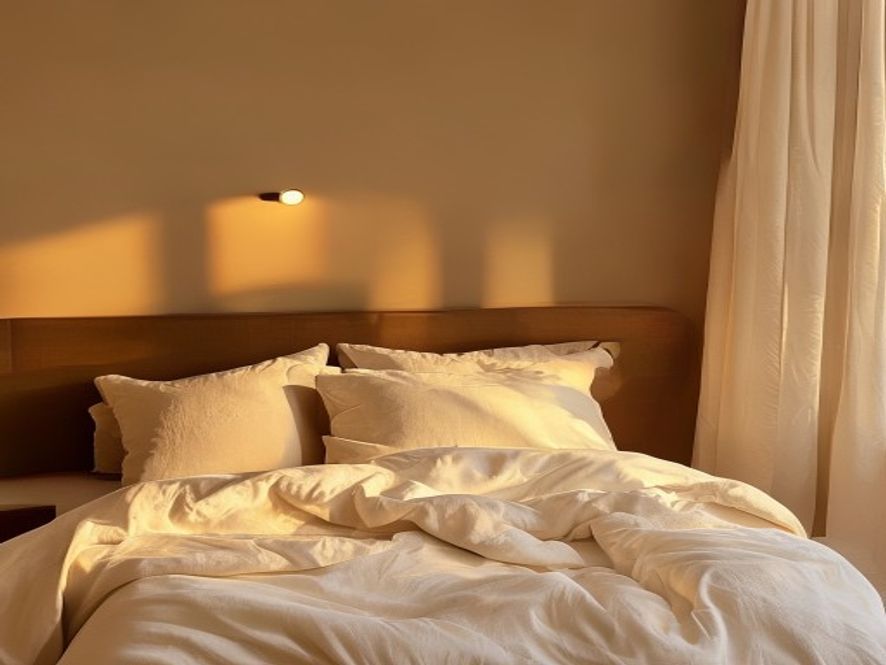
A dimmer switch or warm-toned lamps (3000K or lower) can help during evening hours.
Blue Light and Screens
Blue light from phones, tablets, and computers can suppress melatonin production when exposure occurs close to bedtime. This doesn't mean all screen use is harmful—timing and intensity matter.
Reducing screen time 30–60 minutes before bed, or using blue-light filters, helps maintain natural melatonin production.
Sleep Environment Darkness
Your sleeping space should be as dark as possible—ideally less than 5 lux (a standard of darkness where you cannot see your hand in front of your face).
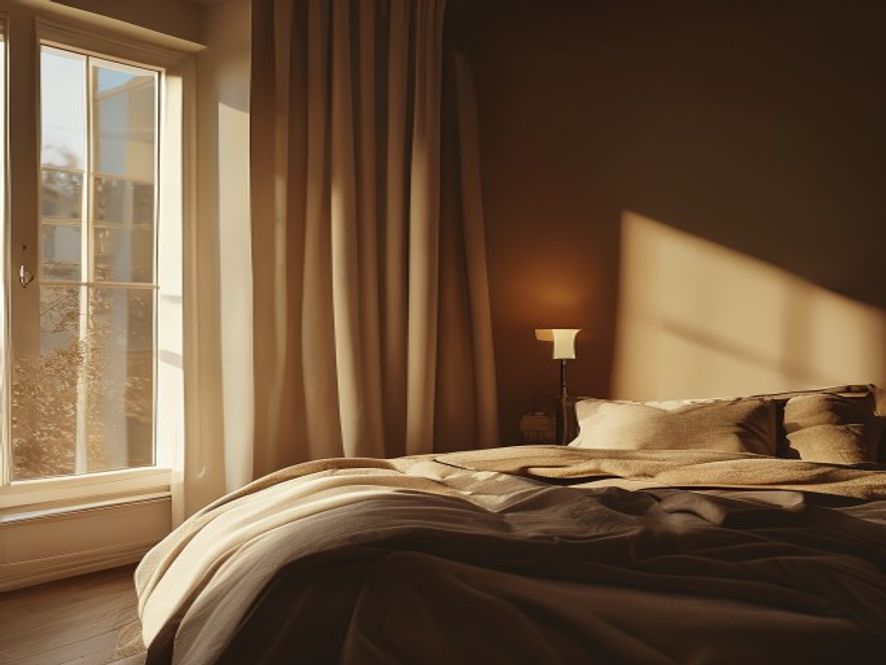
Blackout curtains, eye masks, or light-blocking shades are practical solutions for managing external light.